General Health,Hair Loss,Health & Fitness,Health & Wellness,Health Care,Life Style,Medicine,Medicines Order,Men's Health,Order Medicines,Pharmacy,Physical Sciences,Women's Health
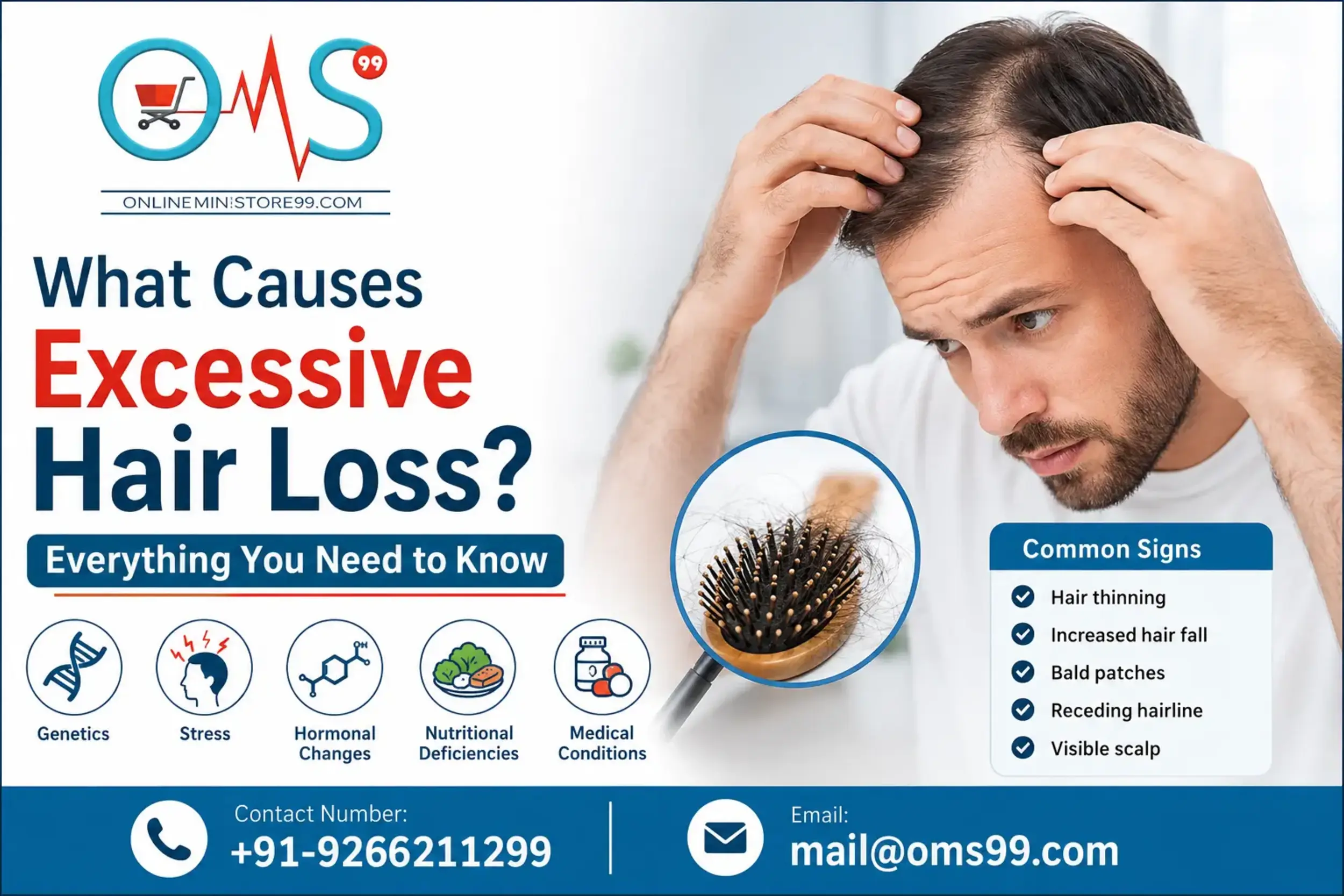
What Causes Excessive Hair Loss? Everything You Need to Know
Introduction
Hair loss affects the confidence and appearance of men and women and can be caused by several factors. There are many different types of hair loss (known scientifically as alopecia) and each type guarantees different reasons why you might be losing hair.
Phases of the Hair Growth Cycle
Stages:
Growth stage (Anagen): Growth phase of the hair follicle.
Intermediate stage (catagen): Next, the deepest part of the hair follicle begins to shrink, and the hair enters the resting and shedding phase of its natural growth cycle.
Stage of rest or detachment (Telogen): Naturally, as older hair reaches the end of its growth cycle and falls out, new hair begins to grow in its place, maintaining a healthy hair growth cycle.
Prescription Treatment
Androgenic Alopecia (Baldness Pattern)
This type of hair loss is commonly known as male / female pattern baldness that begins in the early 20s. It starts with hair loss and hair loss from the crown and front scalp. Women usually experience it later in life and experience a general thinning of the hair. It can be hereditary or caused by hormones, it still has relatively unknown causes of hair loss.
Alopecia Areata (Bald Patches)
It starts with the loss of hair in patches, and then it becomes complete baldness. Luckily, the hair begins to return after a few years. Additionally, this condition has been linked to stress and may trigger an autoimmune response in which the body’s immune system mistakenly attacks healthy hair follicles, leading to hair loss.
Involutive Alopecia
A natural phase in which the hair follicles stop producing and the hair becomes shorter. During this time, the growth phase shortens and enters the resting phase. Additionally, age-related hair loss becomes more common over time. One of the earliest signs is gradual hair thinning, which may indicate changes in the natural hair growth cycle.
Trichotillomania
Additionally, trichotillomania is a psychological disorder in which a person has a recurring urge to pull out their own hair. Although the exact cause is not fully understood, it is believed to result from a combination of genetic and environmental factors.
Telogen effluvium
As a result, large numbers of hair follicles enter the resting (telogen) phase at the same time, leading to increased hair shedding and noticeable thinning. Caused when a person’s system is in shock, due to illness, accidents, certain medications, over-sun exposure, surgery, nervous shock.
Scarring alopecias
A permanent loss of hair caused by inflammatory skin conditions. As a result, these conditions can lead to scarring that damages the hair follicles, preventing them from regenerating and producing new hair.
How to Stop Hair Loss
Androgenic Alopecia (Baldness Pattern)
Fortunately, a combination of healthy lifestyle changes, medical procedures, and prescription treatments can help slow, prevent, or even reverse pattern baldness in some individuals. Almost a third of men and women will experience some type of pattern baldness; the reasons for the exact reason why this happens are still unclear. It is believed that environmental factors and genetics could play an important role.
Alopecia Areata (Bald Patches)
Dealing with bald patches involves taking anti-inflammatory medications to prevent the body from attacking itself and providing relief to the hair follicles. The treatment involves taking a steroid.
Involuntary Alopecia
Additionally, age can play a significant role in changes to hair health over time. Therefore, avoid using harsh hair products or excessive hair coloring, as these can further weaken your hair and contribute to hair loss.
Trichotillomania
Additionally, because trichotillomania (hair-pulling disorder) is a psychological condition, recovery often involves developing strategies to reduce and prevent the urge to pull out hair. Head covers, gloves, slippery oils, and the help of others can help and make the hair recover.
Telogen Effluvium
The treatment and recovery of telogen effluvium come from a diet that includes nutrients such as vitamin D, iron and zinc, being careful not to dry, smooth, curl or dye the hair.
The decreased stress also shows that it promotes the growth cycle, and finally seeks a solution of prescription drugs if the situation demands it.
Scarring Alopecias
However, the treatment for scarring hair loss depends on the extent and type of damage to the scalp. Depending on the underlying condition, medications or surgical procedures may help stimulate hair growth in the affected areas.
Frequently Asked Questions (FAQs)
Q1. Why am I losing my hair?
Ans. Genetics, stress, and an unbalanced diet are some of the reasons. In addition, one’s age and changing hormones can result in hair loss.
Q2. Can my diet be responsible for hair thinning?
Ans. Certainly, it is because of daily nutrition. Lack of iron and proteins will make your hair fragile and breakable.
Q3. Will my hair grow back?
Ans. Yes, in many cases, hair loss caused by extreme stress or an underlying health condition is temporary. Once the underlying cause is identified and treated, normal hair growth is often expected to return over time.
Q4. When should I visit a doctor?
Ans. However, if you experience sudden hair loss or notice hair falling out in patches, it is important to consult a doctor promptly for an accurate diagnosis and appropriate treatment. In addition, you should visit a doctor when your scalp gets itchy and irritated.
Q5. How does it affect Women’s Health?
Ans. Good looking hair indicates that your body is healthy inside. Thus, hormonal balance and proper nutrition are very important for women’s health.
Conclusion
Nourkrin and Propecia have been shown to promote and increase hair growth for those suffering from the various types of hair loss mentioned above. You can find these and many more prescription drugs on Oms99 at a great low price.