Diabetes,General Health,Health & Fitness,Health Care,Life Style,Medicine,Men's Health,Pharmacy,Physical Sciences,Women's Health
What Is Diabetes? Everything You Need to Know
Introduction: Understanding Diabetes
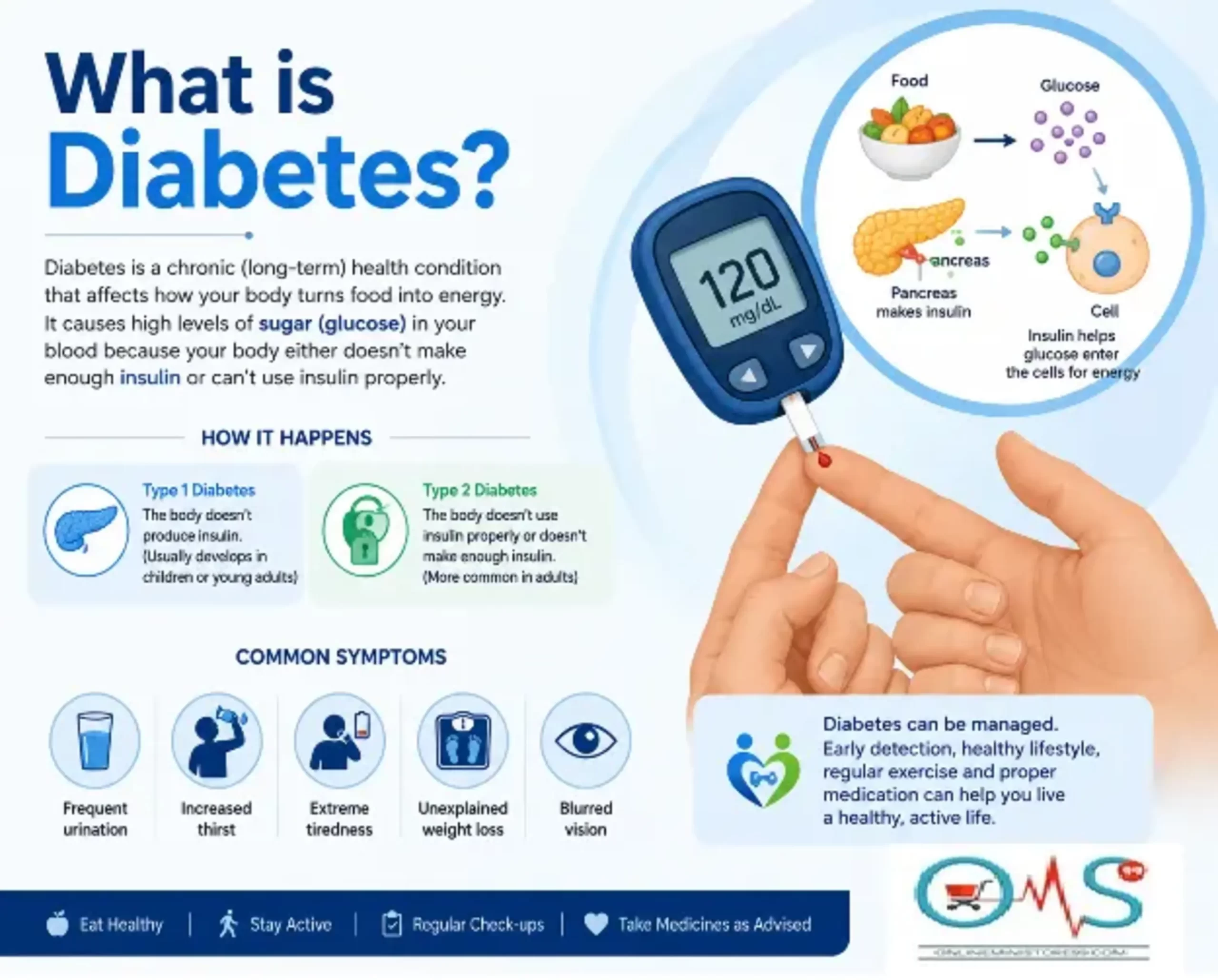
Diabetes is a disease characterized by poor regulation of blood sugar (glucose) levels. Moreover, insulin is also important for controlling blood sugar. Therefore, the significance of proper management cannot be understated in order to remain healthy.
Table of Contents
- Diabetes and its Impacts on the Human Body
- Types of Diabetes
- The Major Causes of this
- Symptoms
- Diagnosis
- Ways of Managing This
- Suggested Solutions for Managing This Disease
- Health Problems Associated with This
- Prevention of this disease
- When Do I Need to See My Doctor?
- Frequently Asked Questions (FAQ)
- Conclusion
Diabetes and its Impacts on the Human Body
Glucose serves as the fuel for our body. Meanwhile, insulin helps glucose enter the cells. But if there is no sufficient insulin, blood glucose remains elevated. And thus, continuously high blood glucose harms organs and blood vessels.
Types of Diabetes
Type 1 Diabetes
Specifically, it results from the immune system’s attack on insulin-producing cells and therefore requires lifelong insulin treatment.
Type 2 Diabetes
This is the most frequent type. In this condition, the body either resists or does not produce enough insulin.
Gestational Diabetes
Usually, it develops during pregnancy and generally goes away after childbirth. However, it increases the risk of developing the condition later.
Prediabetes
In this stage, blood sugar levels are elevated, but not high enough to be called the condition. Meanwhile, it develops during pregnancy and generally goes away after childbirth.
The Major Causes
Additionally, the key risk factors include:
- Family history
- Another important risk factor is obesity
- Lack of physical activity
- Additionally, poor eating habits increase the risk.
- Advancing age
- Another key risk factor is high blood pressure.
- High cholesterol levels
- Another important risk factor is previous gestational disease.
As such, possessing diabetes risk factors increases your risk of having the disease.
Symptoms
Typically, symptoms may appear gradually. Common symptoms are as follows:
- Initially, frequent urination may occur
- Excessive thirst
- Often, increased hunger is experienced.
- Unexplained weight loss
- Additionally, fatigue may occur
- Blurry vision
- Often, wounds heal slowly.
- Susceptibility to infections
- Typically, numbness or tingling occurs in the hands and feet.
- Hence, it is necessary to recognize early symptoms.
Diagnosis
Additionally, doctors use various tests to diagnose the condition. Common diagnostic tests include:
- One common diagnostic test is a fasting blood test.
- HbA1c test or A1C test
- Another common diagnostic test is a random blood sugar test.
- Moreover, doctors may conduct a glucose tolerance test.
In addition, regular testing is extremely important for people at risk of developing the condition.
Ways of Managing This
Healthy Diet
It is essential to eat right, work out, keep your weight in check, and manage your blood sugar level.
Medicines
When necessary, doctors usually prescribe oral hypoglycemic medications and insulin.
Suggested Solutions for Managing This Disease
Moreover, here are some effective tips for dealing with the condition:
- Proper nutrition
- Blood glucose level monitoring
- Physical exercises
- Healthy body weight
- Medication intake on time
- Stress management
- Restful sleep
- Regular medical visits
Additionally, these guidelines help you manage the condition naturally.
Health Problems Associated with This
Unfortunately, poorly controlled disease eventually leads to:
- Heart disease
- Stroke
- Kidney disease
- Nerve damage
- Vision problems
- Foot complications
Therefore, consistent management prevents diabetic complications.
Prevention of this Disease
Additionally, effective methods for preventing this condition are:
- Maintaining healthy weight
- Doing regular physical activity
- Eating healthy food
- Limiting the intake of sweet drinks
- No smoking
- Having health check-ups regularly
While Type 1 cannot be prevented, living healthy reduces the chances of having Type 2.
When Do I Need to See My Doctor
However, consult a physician if you suffer from:
- The symptoms of high blood sugar
- Increased urination and thirst
- Unplanned weight loss
- Poor healing of wounds
- Vision impairment
- Other risk factors
As a result, you will be able to diagnose and treat the condition in time.
Frequently Asked Questions (FAQs)
Q1. What is diabetes?
Ans. In simple terms, it is an illness that results from the body’s inability to control blood sugar due to insufficient insulin production or absorption.
Q2. What are the initial symptoms of diabetes?
Ans.In general, frequent urination, thirst, fatigue, vision problems, hunger, and slow wound healing are common symptoms.
Q3. Can type 2 diabetes be prevented?
Ans.Yes. In fact, good nutrition, physical activity, a healthy weight, and routine screenings can help prevent it.
Q4. Can diabetes be treated?
Ans.Although it is untreatable, it can be managed with lifestyle changes and medication therapy.
Q5. How often should I test my blood sugar?
Ans. However, it largely depends on the type of disease you have and how you treat it.
Conclusion
Therefore, knowing what diabetes is, recognizing the initial symptoms, and managing blood sugar are essential. In general, regular monitoring will help you avoid any potential complications and live better. For more health information, visit Oms99.