Health & Fitness,Health & Wellness,Joint Health,Medical Education,Medicine,Medicines Order,Men's Health,Order Medicines,Osteoporosis,Pain Management,Pain Relief,Pharmacy,Women's Health
The Best Exercise to Prevent Osteoporosis Disease
Introduction
The best way to increase your bone strength and prevent osteoporosis disease is to exercise regularly. Even if someone already has osteoporosis, exercising can help maintain the bone mass they do have.
Why is exercise essential for osteoporosis? Experts say exercise not only helps build mass and endurance, but also helps maintain the amount of thickness in your bones. Weight training, resistance training, and flexibility are the three types of exercises for patients with osteoporosis. The drug Vitamin Shoppe Calcium Citrate is preventing osteoporosis by developing healthy bones.
Why Is Weight Training Effective for Osteoporosis Disease
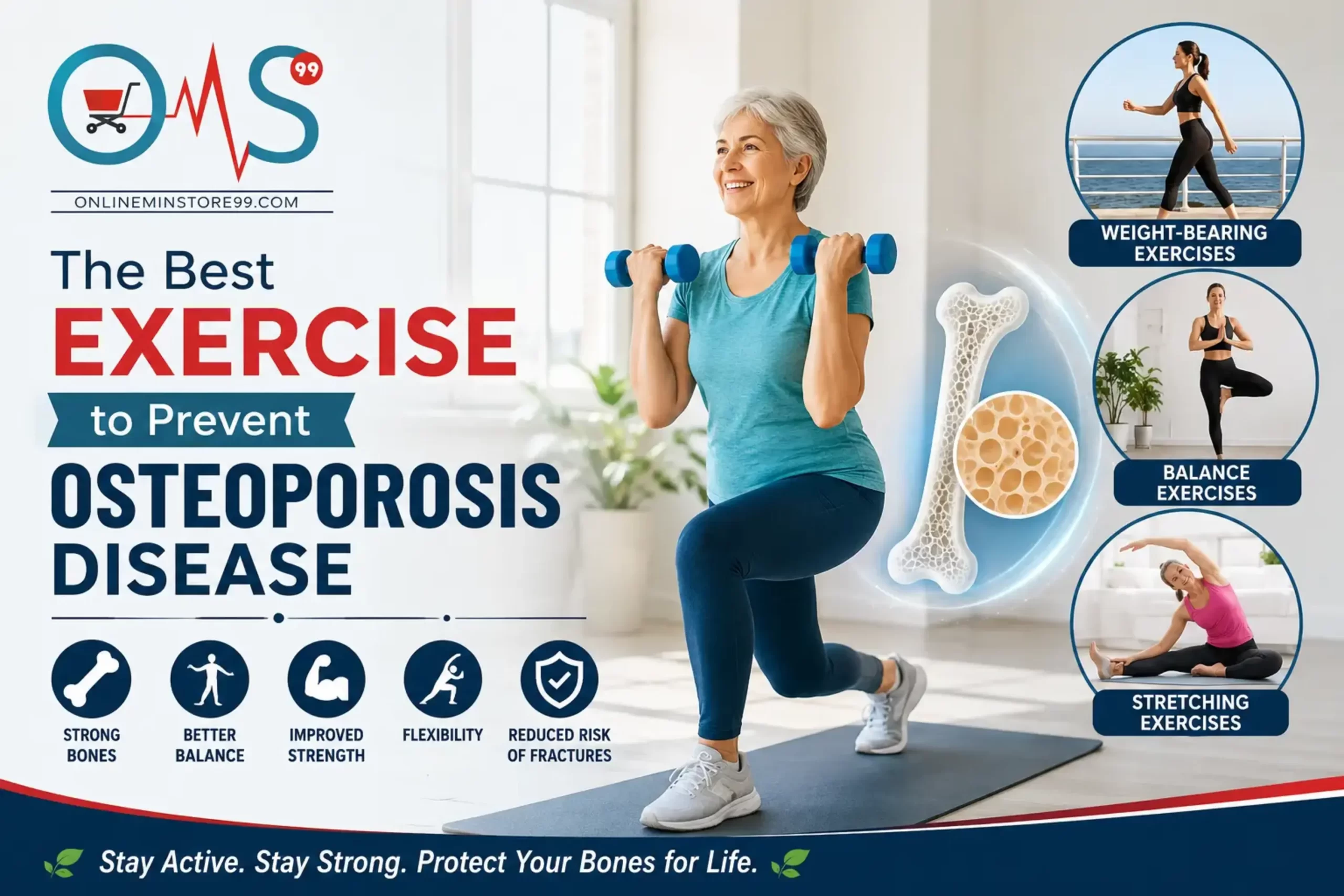
Weight exercises involve bones, leg, and trunk muscles that work against the force of gravity, while these parts support the weight of your body. Examples of weight training are walking, jogging, stair climbing, dancing, and aerobics. Weight training is considered the most effective form of exercise, especially when it comes to maintaining healthy bones in the spine and hip. Push-ups against the floor or wall in a standing position are also a type of weight-bearing exercise, as the arms during the training arms are loaded with body weight. An exercise that tends to increase heart rate, such as running and dancing, also strengthens the heart along with muscles and bones.
- Weight-bearing aerobic exercises help support bone health and reduce the risk of osteoporosis.
- Not all aerobic exercises are weight-bearing—activities like cycling and swimming are beneficial but do not provide the same bone-strengthening benefits.
- Regular weight-bearing exercises are important for maintaining strong bones and overall health.
- Exercise intensity should match your health condition and fracture risk.
- People with osteoporosis or a high fracture risk should choose low-impact, weight-bearing exercises.
- Select exercises based on your fitness level, skills, and medical condition.
- Consult a doctor before starting a new exercise routine if you have any health concerns.
- Start slowly and gradually increase the duration and intensity of your workouts.
- Combine weight-bearing exercises with strength training for better bone health.
- Exercise is most effective when paired with prescribed osteoporosis medications, if recommended by your healthcare provider.
Strength Training for Osteoporosis Disease
Strength training involves the use of free weights, exercise bands, or weight machines to make bones and muscles work. Helps increase bone density of bone and spine. For the most benefit, perform strength training two to three times a week after moderate to high intensity using all the major muscles. It is recommended to go slowly and gradually increase the intensity. If performed under the guidance of an experienced instructor, one will be able to follow the appropriate progression of exercise intensity. For beginners, those who cannot lift, push, or pull weight can start by holding their arms or legs against gravity. In this way, your arms and legs act as the load. As strength improves, one can gain weight.
Water resistance exercises can increase muscle strength. During resistance exercise, the joints experience less stress than they do during resistance exercises.
Exercise to Prevent Osteoporosis Disease Fractures
Exercise not only improves body strength, it also improves balance and coordination, as well as reduces falls and fractures. Exercises, especially balance exercise, improve coordination and movement. If there is a problem with balance, there is an increased risk of falling. Therefore, caution is essential when performing balance exercises for the prevention of osteoporosis disease.
Stretching for Osteoporosis Disease
As we age, we tend to lose more flexibility due to lack of activity and bad habits that lead to pain and stiffness. The more pain we experience, the stiffer our body is, the less likely we are to exercise, and as a result, we tend to lose muscle and bone strength. This further increases the risk of falls and bone fractures. Stretching exercises help reduce pain and stiffness by improving flexibility and expanding your range of motion. Stretching is an effective technique to warm up the muscles. When the muscles heat up, they tend to not have good blood flow, resulting in a better range of motion and therefore less injury.
Frequently Asked Questions (FAQs)
Q1. Which workout helps to avoid osteoporosis?
Ans. Weight training exercises, such as brisk walking and weight lifting exercises are the best options. This way, your body resists the effect of gravity, thereby building stronger bones.
Q2. How regularly should I work out for healthy bones?
Ans. A daily workout of at least thirty minutes should be done. Also, regular workouts keep your joints mobile and prevent bone degeneration.
Q3. Is yoga useful in preventing this frequent bone condition?
Ans. Certainly, yoga will help. Besides, yoga improves balance, preventing potentially hazardous falls.
Q4. Is there a need for proper nutrition besides exercising on a daily basis?
Ans. Certainly, proper nutrition is highly important. This way, always consume fresh food with calcium to promote bone recovery.
Q5. Does bone health have any effect on sexual wellness?
Ans. Certainly, it does. Basically, maintaining a high level of physical activities increases your energy, mobility, and confidence, hence sexual wellness.
Conclusion
If you have osteoporosis, be careful when bending or twisting your waist. This movement can make it more likely to cause a fracture. Follow the exercise regimen along with osteoporosis medications to reduce the risk of fracture. Buy medicine online for osteoporosis treatment and enjoy a healthy and better life. You can find all these bone health drugs & supplements at Oms99.